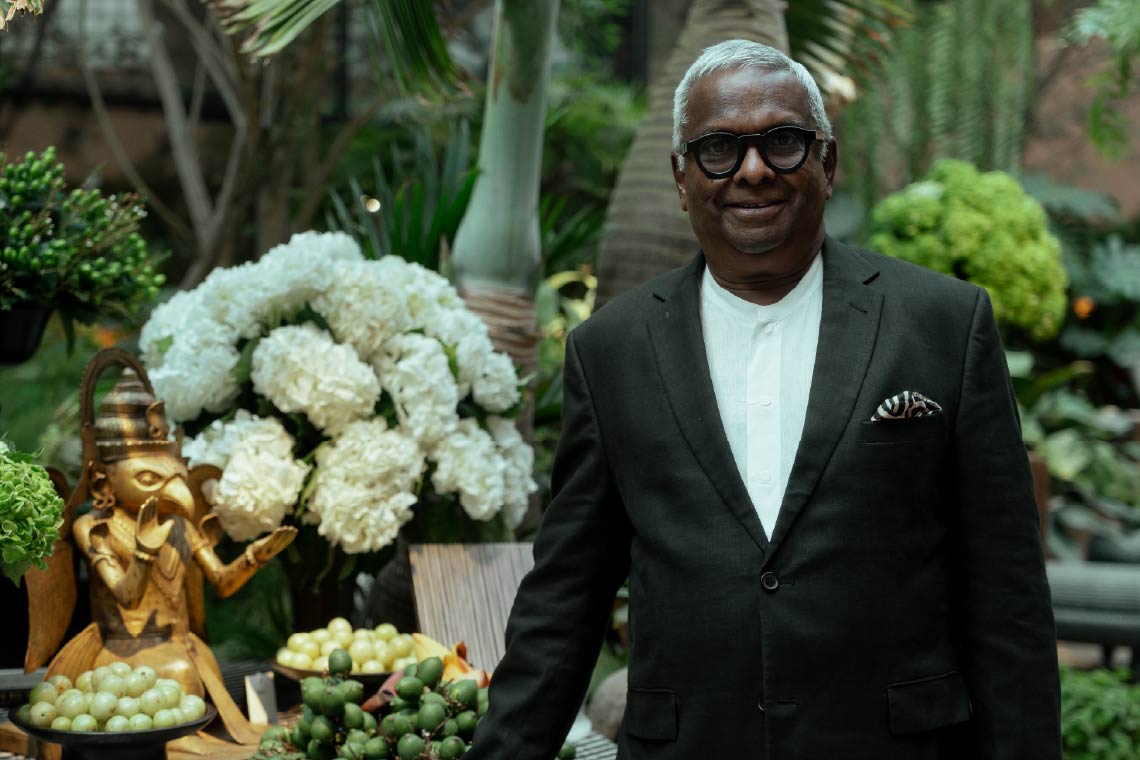
Architect Channa Daswatte has spent his career telling the architectural story of Sri Lanka. We spoke with him about the future of design on the island – and how to build without losing sight of where we are.
Architecture as Experience
“I believe architecture is a major tourism draw in any nation,” says Daswatte. “Often it’s great monuments we go to see. But in Sri Lanka, you don’t just look – you experience, in real time, spaces and textures.”
He believes the country has already proven its strength in spatial storytelling. “Sri Lanka has done well to create these experiences in its hotels and restaurants. However, more can be done to encourage developers to follow styles and materials that evoke uniquely island experiences.”
On Global Trends and Copy-Paste Design
The pull of Pinterest-perfect properties and algorithm-led aesthetics has made sameness a growing concern worldwide. We asked Daswatte whether he sees that affecting Sri Lankan design – especially in new hospitality developments.
“What is inspiring is a particular feel of a space,” he says. “Now the shortcut is to copy it. But a more diligent approach would be to get the same feel with local materials and techniques.”
“This makes for a new, unique experience that can inspire travellers and others – and help place travellers in a specific place.”
How to Build Here, Now
When asked what five principles he’d offer to someone designing a building in Sri Lanka today, Daswatte shared the following:
Use locally available renewable materials.
Clay, lime, timber, coir – materials that are naturally durable, low-impact, and suited to tropical climates.
Use local skills and methodologies.
It preserves cultural identity, supports the local economy, and creates buildings that are rooted in place.
Design passive spaces.
“While air-conditioning may be necessary, create transitional zones between indoors and out to reduce solar gain and energy loads.”
Design with Sri Lanka’s seasons in mind.
“Visitors don’t want to just breathe canned air all the time. Let them feel where they are.”
Respect your context.
“Remember – while you may enjoy a view, others may not enjoy having you in their view if you are an eyesore! Respect the landscape and those you share it with.”
Toward a More Grounded Future
Daswatte’s words are clear: architecture isn’t just about aesthetics – it’s about belonging. And while design inspiration may come from anywhere, the result, he argues, should always feel like here.