On heritage, discipline, and the long work of an island learning to design in its own voice, as seen through the eye of one of its defining practitioners, Udayshanth Fernando.
Read More

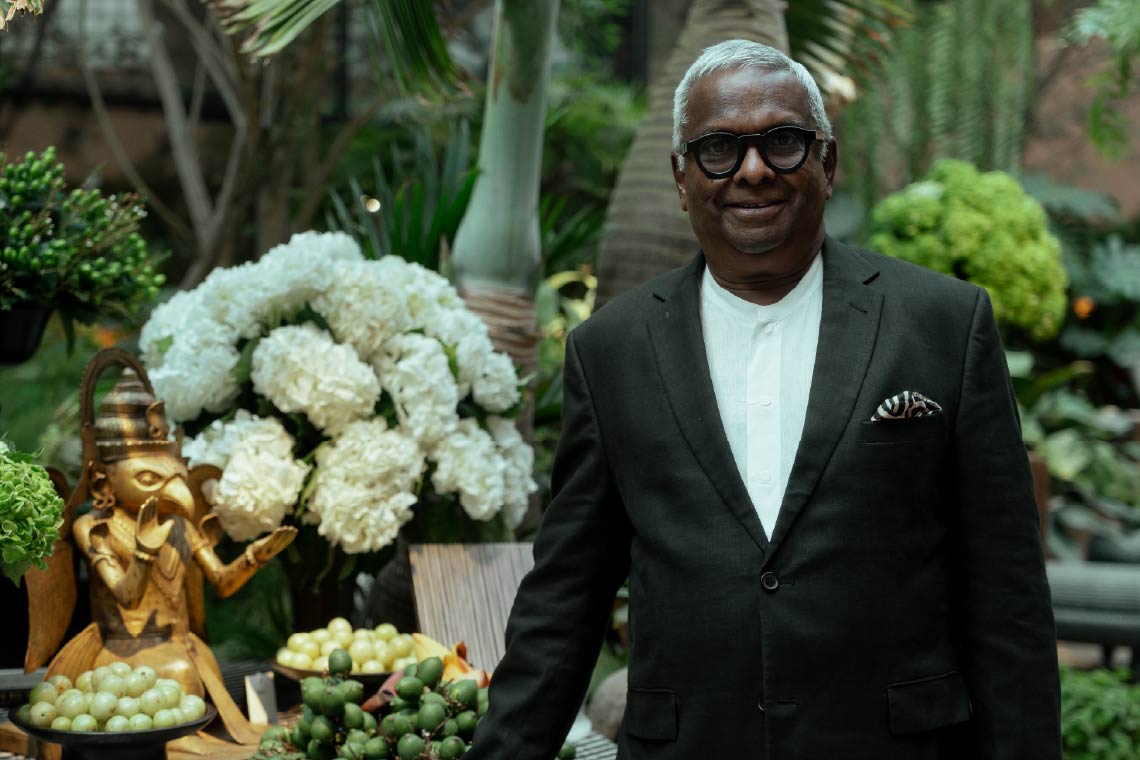
COLOMBO – Ask what makes a piece of design “authentically Sri Lankan,” and the answer gets complicated fast. For generations, the island’s visual identity ran through a colonial filter: its interiors, its architecture, even its baseline sense of taste, were inherited more than invented. The bigger story of the last forty years isn’t any single building or brand. It’s the harder, slower project of a design language, figuring out how to hold that colonial inheritance without being ruled by it.
Udayshanth Fernando, the founder of Paradise Road, has spent much of his career inside that project. “Sri Lankan aesthetics are influenced by our colonial past, and these elements can be reinterpreted within eclectic interiors to create spaces that are relevant to today’s design world,” he says. “To be authentically Sri Lankan, one must incorporate Sri Lankan artefacts that reflect our cultural heritage.” For Fernando, the past isn’t something to strip away. It’s raw material.

That has consequences beyond any single room. “Well-considered design plays a vital role in shaping a country’s cultural identity because it preserves heritage while allowing it to evolve,” Fernando says, “creating a visual language that is authentic, distinctive, and recognised both locally and internationally.” Get the balance wrong, in other words, and a country’s design either calcifies into pastiche or dissolves into anywhere-style modernism. Get it right, and the buildings themselves start to carry a national argument.
Fernando’s own answer to that argument has been a break from the ornamental colonial style that dominated Sri Lankan interiors for decades. “Paradise Road established itself with a distinct monochrome palette and created a design aesthetic that was tasteful and stylish, in contrast to the traditional colonial style that had long dominated,” he says. “In doing so, it helped redefine Sri Lankan design by demonstrating that local craftsmanship, materials, and cultural influences could be expressed in a stylish and sophisticated way.” He is one of several designers to have reached their own version of the same idea. Geoffrey Bawa arrived at it through architecture; Barbara Sansoni’s Barefoot arrived at it through textiles and colour. Fernando’s route ran through restraint, monochrome, and a curatorial eye for objects.

Craft is where he thinks that identity is won or lost. “I have always believed in preserving the integrity of craftsmanship rather than pursuing mass production,” he says. “By working closely with craftspeople, we can help them refine their skills, develop products of international appeal, and create work that remains true to their abilities and heritage.” He’s blunt about what’s at stake if that balance tips too far toward volume. “When handmade traditions are pushed towards mass production, the unique qualities, imperfections, and stories that make each piece special can be lost. The future of Sri Lankan craftsmanship lies in balancing innovation with authenticity, allowing traditions to evolve while preserving their distinctive character.”
Ask him how his interiors have managed to outlast decades of trend cycles and social media aesthetics, and he credits consistency over reinvention. “Paradise Road carefully cultivated a taste and style of living that transcended passing fads, while remaining current in the world of design through a timeless and classical aesthetic,” he says.

Still, Fernando won’t claim to have settled the question of what Sri Lankan design is, or should be. “Design is a variation on a theme, and most things have been created before,” he says. “It is therefore essential that whoever produces a product injects their own taste and style to create something unique in the marketplace.” Asked who might carry the search forward after him, he won’t guess. “It is difficult to forecast the future development of design, as each designer brings their own taste and style to their work. The inspirations and motivations that will shape future design cannot be predicted.”

What he’ll offer instead is a way of looking. “A home reflects the people who live in it,” he says. “Therefore, to live beautifully, one’s home should reflect one’s taste, style, and personality.” It’s a modest way to put it, for a career spent arguing that a national aesthetic doesn’t get decided from a podium. It gets built house by house, in the choices people make about how they actually want to live.
Fernando’s own body of work is the subject of Udayshanth Fernando: Living Design, the first monograph devoted to his practice, published this year by Rizzoli International and photographed by Sebastian Posingis. The book moves through his interiors, product design, hospitality projects – including Paradise Road Tintagel Colombo and Paradise Road The Gallery Café, once the studio of Geoffrey Bawa – and his private art collection, which includes works by ’43 Group artists George Keyt and Ivan Peries. It features essays by curator Sean Anderson, Christie’s India chairman Sonal Singh, and cultural journalist Bandana Tewari.


