In hospitality, design is rarely the question. Almost every developer begins there.
The more difficult question is how far to take it.
Read More

Across global tourism markets, from the Mediterranean to Southeast Asia, there’s a visible split emerging. On one end, projects built to meet demand: efficient, well-finished, commercially sound. On the other hand, projects where design is treated as a primary driver of identity, experience, and long-term value.
Both can succeed. But they operate on different timelines.
The first is optimised for function. The second is designed for distinction.
Investing in design, whether through a globally recognised architect, a rigorous concept, or simply the discipline to hold a clear idea, comes at a cost. Not just financially, but operationally.
Better architects demand more time. More iteration. More restraint. They often push against density, against over-programming, against the instinct to maximise every square metre.
The question, then, is not whether design matters, but how much it is worth.
Globally, the answer increasingly leans in one direction.
In a saturated market, where destinations compete visually before anything else, design becomes one of the few remaining levers of differentiation. It shapes how a property is perceived, how it circulates, and ultimately how it performs.
Well-designed spaces don’t just look better. They travel further. They hold attention longer. They create memory.
That has a direct impact on occupancy, pricing, and brand equity.
But it also introduces risk. Over-invest in design without understanding the market, and it becomes indulgence. Under-invest, and the property disappears into sameness.
The balance is rarely obvious at the outset.
Sri Lanka sits in a particularly sensitive position.
The country is no longer emerging; it is established, but still defining what it wants to be known for. Growth is accelerating, particularly in destinations like Ella and Weligama, where new projects are arriving quickly and often simultaneously.
In that environment, design shifts from aesthetic to strategy.
It determines whether a property stands apart or blends in. But more importantly, it shapes how the destination itself evolves.
Architecture, in this sense, carries a responsibility beyond the individual project. It can reinforce the character of a place, or erode it.

For Crystal Property Group (CPG), the decision is relatively clear.
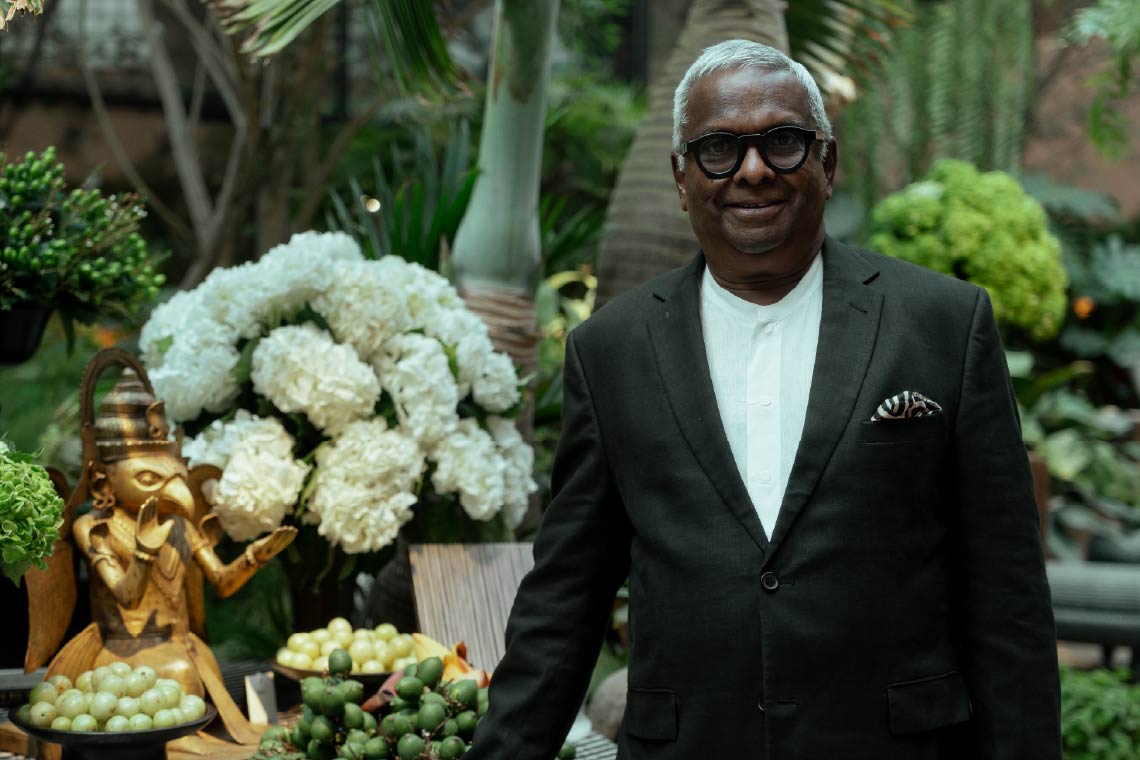
“Design is not something layered onto a project at the end; it is the starting point,” says Reza Magdon-Ismail, Chief Executive Officer. “From site selection to master planning, every decision is shaped by how the space will feel, function, and endure over time.”
It’s not framed as ideology, but as logic.
In a market that is increasingly competitive and visually driven, design is no longer optional. It underpins performance.
“Design is no longer a differentiator, it’s fundamental,” Magdon-Ismail says.
That belief informs how CPG structures its projects, including its collaborations with internationally recognised architects such as Shigeru Ban and Chamika De Alwis, and its ongoing work with studios like PWA on projects in Ella and Weligama.
“Working with globally recognised architects introduces a level of rigour and perspective that goes beyond conventional development,” Magdon-Ismail says. “It challenges assumptions and ensures that each project has a clear identity.”
But that rigour has to be grounded.
“It’s about translation rather than replication,” Magdon-Ismail notes. “International architects bring a design philosophy, but execution must respond to Sri Lanka’s climate, materials, and craftsmanship.”
The commercial impact of that approach is most visible once a project is operational.
At The Six in Weligama, design is not an abstract value; it directly shapes performance.
“Design directly impacts guest experience, which in turn drives occupancy and pricing,” Magdon-Ismail says.
In practical terms, that means stronger visual identity, higher recall, and greater pricing power in a market where guests are increasingly making decisions based on how a place feels before they ever arrive.
The effect compounds over time.
Well-designed properties tend to age more gracefully. They require fewer cosmetic interventions. They retain their positioning longer.
Poorly considered ones often require reinvention.
So how much should a developer invest in design?
There isn’t a fixed answer. But the global trend is clear: as markets mature, the cost of being indistinct increases.
Design is no longer just about standing out at launch. It’s about remaining relevant.
In Sri Lanka, where the next wave of development is already underway, that question becomes more urgent.
Not whether projects begin with design, they almost all do.
But whether they are willing to follow that idea far enough for it to matter.